The sold band is the real buy signal
SearchMusicGear's own sold data for the Rhodes Mark I Stage 73 shows 10 sales averaging about $2,400, with a range of $1,300–$3,499. Good and Very Good units sold for $1,300–$2,300, and Excellent units for $2,000–$3,500. Most of those sales are from 2022–23, with only one in 2026, so treat the band as a guide rather than a live quote. That band, not a high restored asking price, is what decides whether a 1970s tine piano or a modern clone makes financial sense for a gigging player. Searching Rhodes piano vs clone sold prices without splitting original Stage 73s from digital lookalikes is how people overpay on both sides of the trade.
Completed sales are tighter than listings. Working player-grade Stage 73s keep closing around $1,800–$2,800 when they include legs and a pedal. In a broader Rhodes Stage 73 search, Mk1 sales run from $2,199 to $5,500, and top-condition or refurbished Mk1s have sold up to about $5,500 in SMG's data. Digital clones used for the same gig sit at about $1,200–$1,800. Boutique tine clones list far higher and sell rarely.
Run those models through SearchMusicGear's sold price research before you treat any asking price as a comp. The spread between a project piano and a voiced one is where the ownership math lives.
What Rhodes piano vs clone sold prices actually measure
There is not one clone market. There are three, and they do not resell like each other. Mixing them is the usual mistake: a Viscount Legend '70s Compact is not competing with a Vintage Vibe Classic 64, and neither is a substitute for a 1973 Stage 73 until you add repair, weight, and exit price.
Original 1970s Stage 73
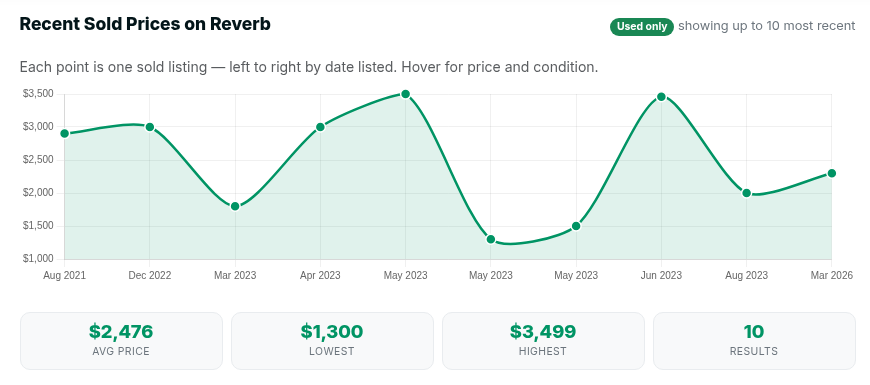
Late Mark I Stage 73s (1975–1979) are the volume model, and the $1,300–$3,499 sold range is the center of gravity. Early 1969–1974 Fender-logo pianos with wooden action rails still carry a premium, and restored examples can sell well above the player-grade band depending on year and voicing. Current asks show the same split between rough project pianos and voiced, restored ones. Suitcase models generally bring more than Stage models, because the amp bottom is part of the instrument, not a free upgrade. A dead key drags the price down, so check sold research before you decide what a flawed piano is worth.
You are not buying a cheap piano with 50 years of interest. You are buying a 130-pound electromechanical device whose sold range is wide, so condition matters more than the year on the badge.
Modern tine pianos
The Vintage Vibe Classic 64 is about 53 pounds, and the 73-key version is about 60 pounds. Resale data is thin: SMG has only one sold, from 2018 at $3,450. Live listings are far higher, with a new 2026 unit around $7,911 and another at $8,799 plus shipping. These do not trade like used Nords. They trade like small-shop instruments with wait times.
The official Rhodes MK8 is a different capital outlay. SMG has no sold data on it yet. Live listings include a used one at $9,999 and a limited edition at $19,299. Weight is about 34 kg (75 pounds). Used examples are scarce, so there is little to tell you what a buyer will really pay.
Digital clones
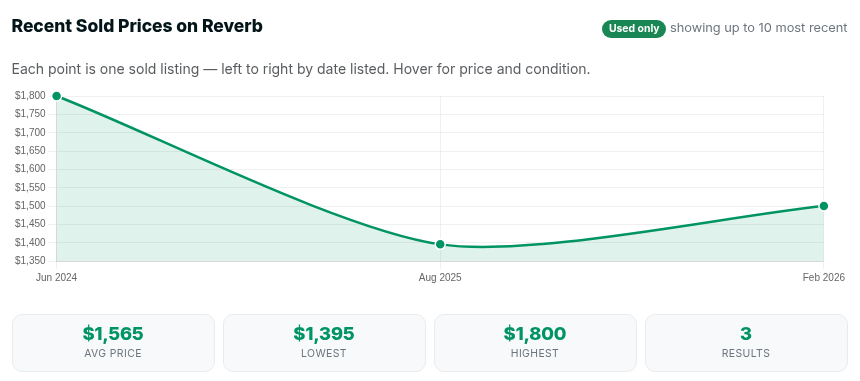
This is the gigging-player clone in the spreadsheet. The Viscount Legend '70s Compact is about 16.2 kg (36 pounds), and new pricing varies by dealer. In SMG's data it has 3 sales averaging $1,565, with a range of $1,395–$1,800, and a live Excellent one is listed at $1,391.
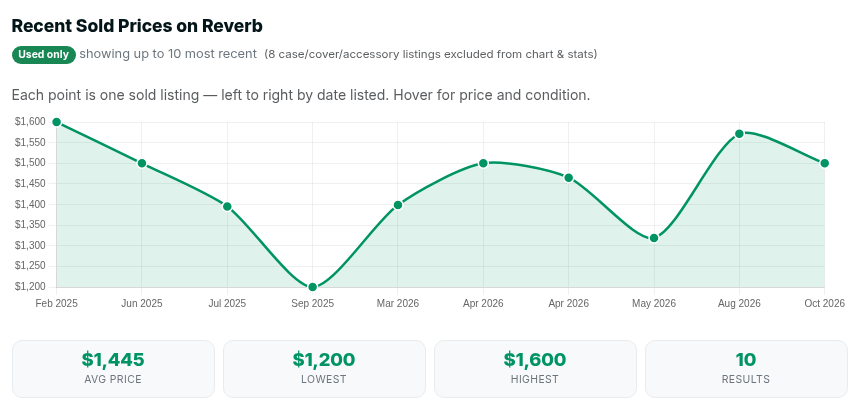
The Crumar Seven is listed new at about $2,227–$2,399. SMG shows 10 sales from 2025 to October 2026 between $1,200 and $1,600, averaging about $1,445. That is a real depreciation curve, not a collector stall.
Repair costs to budget for
Vintage ownership cost is not theoretical, and the parts and labor add up.
- Replacement tines: budget for several, since a neglected piano often needs more than one.
- Grommets and tone-bar screws: hard, shrunk grommets are why a cheap Rhodes sounds short and dead, and almost every unserviced 1970s piano needs attention here.
- Hammer tips, damper felts, and springs: a touring player should keep a few spares on hand.
- Tech labor: a voicing and regulation service is where most of the cost lands. Get a local quote before you buy.
- Electronics: a dead suitcase preamp is a serious problem, not a quick solder joint.
A piano that needs five tines and a grommet kit is not cheaper than one that was just voiced, even if the asking price looks lower. That is the number listings hide, so add parts and a tech's quote to the price before comparing.
Digital clones do not have tines. Failures are power supplies, keybeds, and screens. Budget near zero in years one through three unless you abuse the unit. Vintage Vibe and MK8 still use tines, so they inherit the same parts logic, with newer stock and, on the MK8, factory support.
Resale curves after two or three years
Vintage Stage 73s are not melting, but they are not ripping higher every quarter either. The $1,300–$3,500 sold band is the hold value for a complete, working piano. Restored pieces can exit above that band; unrestored ones sink toward the floor, especially with missing lids, dead notes, or no pedal. Local pickup dominates because shipping a 130-pound harp is expensive, which is why shipped comps often look weaker than driveway deals.
Digital clones follow normal stage-piano depreciation. A Crumar Seven that is listed new around $2,399 and sells around $1,445 loses roughly $950 as a rough example. The Viscount's used market is already close to its asking prices, so it is flatter still. You lose some money. You do not lose a van's worth of instrument.
Boutique tine clones are illiquid. Strong-looking asks mean little until you need to sell this month. MK8 used supply is still a handful of listings worldwide. Treat both as hold-to-order sales, not 30-day flips.
Gigging ownership math
These are rough examples built only from the SMG figures above. Check live solds on SearchMusicGear before you copy the exits.
- Stock Mark I Stage 73. A piano bought around the $2,400 average tends to resell in the same $1,300–$3,500 band, minus whatever repairs cost. The result depends on condition, so budget for a tech visit and shipping or local pickup.
- Crumar Seven. Bought new around $2,399 and resold around $1,445, it is roughly a $950 hit. One person carries it, and you give up real tines.
- Viscount Legend '70s Compact. Sold prices average $1,565, so a used one bought near that and resold at the low end of $1,395 loses little. It is light at 36 pounds.
- Vintage Vibe Classic 64 and Rhodes MK8. Live asks run from about $7,900 up to $19,299, and sold data is thin or missing, so exit prices are guesswork. Plan for a large capital lock and a slow sale.
Flip math on vintage only works at the bottom of the sold band. Buying at the top of the range, adding shop work, and paying selling fees is close to break-even with extra steps. The gains live in local pianos that need parts you can install yourself, not in restored listings already priced as finished goods.
When the vintage piano still wins
Buy original if you need the record sound under your hands, you have a van or a studio that does not move, and you can service the harp. Pre-1975 wooden-rail Stage 73s still have a collector bid under the player bid, which supports the floor. A well-bought 1970s piano is also the only one of these assets that will still be a 1970s Rhodes decades from now. Clones follow product cycles.
Buy a digital clone if you gig weekly, load in alone, and care about total dollars more than tine noise. The Viscount and the Seven are the lightest, cheapest options here to own over a few years of real use, and both resell in the $1,200–$1,800 range.
Buy a Vintage Vibe if the job is touring tine tone and you can float serious capital. The MK8 is the same idea at higher cost and 75 pounds. Neither is a flip. Both avoid the 130-pound original.
Deal Desk on SearchMusicGear is the right place to test a “cheap” Rhodes listing: add missing pedal and lid, a grommet kit, tines, shop hours, and shipping. If the all-in number lands above the sold band, it is not cheap. It is a project priced as a piano.
Check the listing against completed sales
Before you bid, pull solds by year and condition, not by the word Rhodes. A 1978 Stage 73 in Very Good is not a 1972 in Excellent. Confirm legs, pedal, lid, and whether the top notes speak. Dead treble is the usual tell that nobody has opened the harp in a decade. SearchMusicGear's gear value view is useful for a quick band; sold price research is what you use when the listing is well below ask and you need to know if that is a gift or a crate of broken tines.
On the way out, price inside the sold band if the piano is a player, and only above it with invoices for voicing, grommets, and tines. Restored comps are real, but they are a different SKU. Digital clones should be priced off recent solds, about $1,200–$1,800, not off the original box price.
The financial answer for most gigging players is the digital clone. The musical answer is still a voiced 1970s Stage 73 or a modern tine piano, paid for with eyes open. Use completed sales, not hope, to pick which bill you actually want to pay.