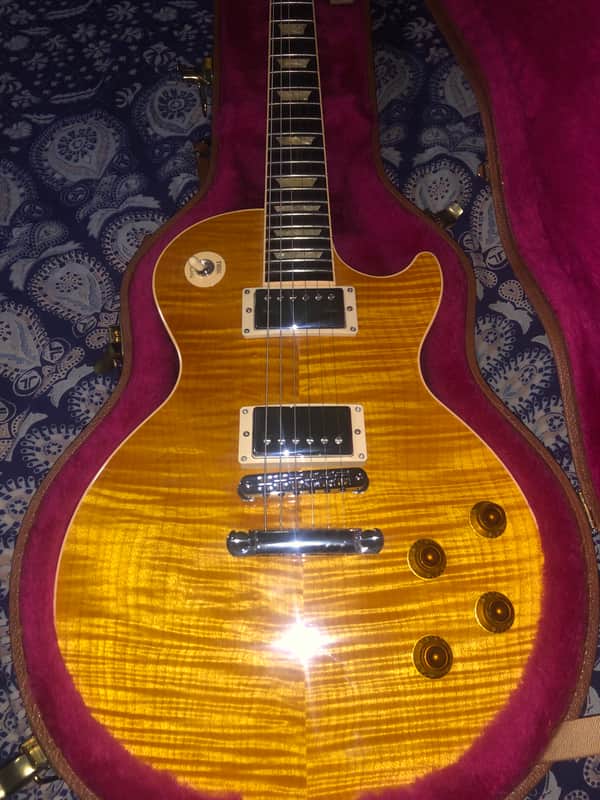
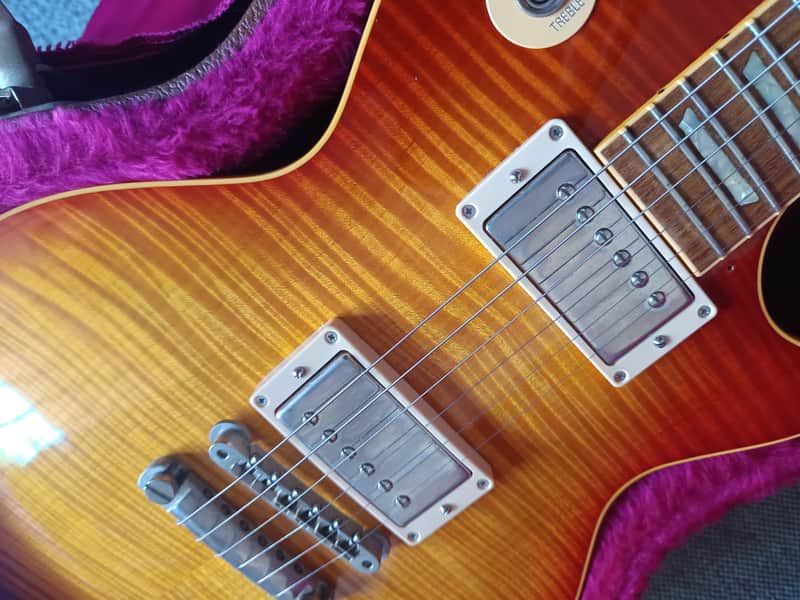
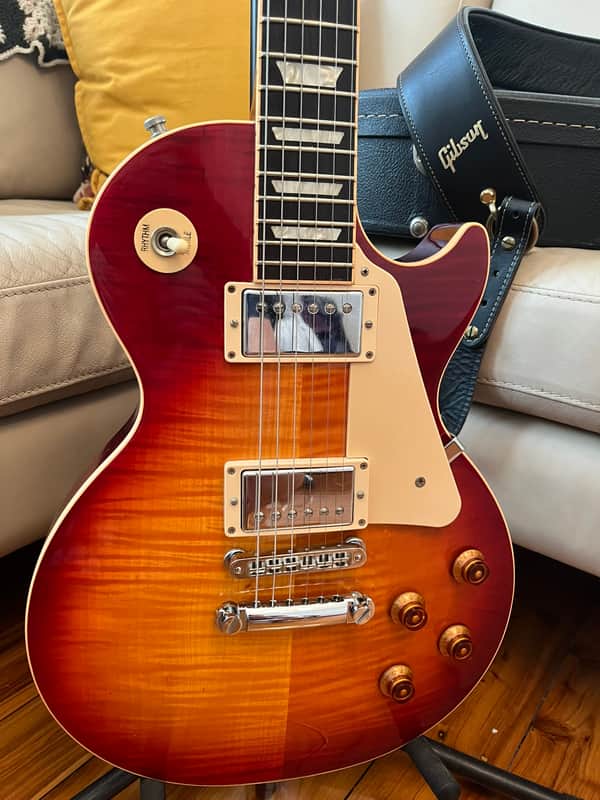
The Gibson Les Paul is an iconic solid-body electric guitar model developed by Gibson Guitar Corporation in collaboration with jazz guitarist and inventor Les Paul, first introduced in 1952 as a response to Fender's Telecaster. Featuring a mahogany body with a carved maple top, set neck, and initially P-90 pickups (later upgraded to humbuckers in 1957), it was designed for superior sustain and tone, quickly becoming a staple in blues, jazz, and rock. Production was discontinued in 1961 due to declining sales but revived in 1968 amid the British Invasion and rising demand from rock stars, leading to various reissues and custom shop models. Today, the Les Paul remains a cornerstone of Gibson's lineup, celebrated for its versatility, rich harmonics, and timeless design, with variations like the Standard, Custom, and Studio catering to players across genres.
Notable Artists Who Have Endorsed the Gibson Les Paul
-
Jimmy Page (Led Zeppelin): The legendary rock guitarist made the Les Paul his signature instrument, using models like the '59 Sunburst for Led Zeppelin's epic riffs and solos on albums such as Led Zeppelin II and IV, often with modifications for his mystical, heavy sound.
-
Slash (Guns N' Roses, Velvet Revolver): Known for his top-hat-and-Les-Paul image, Slash has endorsed Gibson with signature models based on his '59 replica, delivering the searing leads heard on Appetite for Destruction and beyond in hard rock and blues.
-
Duane Allman (The Allman Brothers Band): A slide guitar pioneer, Allman favored the Les Paul for its warm tone on classics like At Fillmore East, blending blues and Southern rock with his '59 Burst model before his tragic death.
-
Joe Bonamassa (Blues-rock solo artist): A modern blues virtuoso and collector, Bonamassa endorses Gibson Les Pauls, including signature models inspired by vintage 'bursts, using them for their expressive dynamics in his high-energy performances and recordings.
-
Gary Moore (Thin Lizzy, solo): The Irish guitarist endorsed the Les Paul for its sustain and bite, famously playing a '59 model (Peter Green's former guitar) on hits like "Still Got the Blues," bridging hard rock, blues, and fusion styles.